


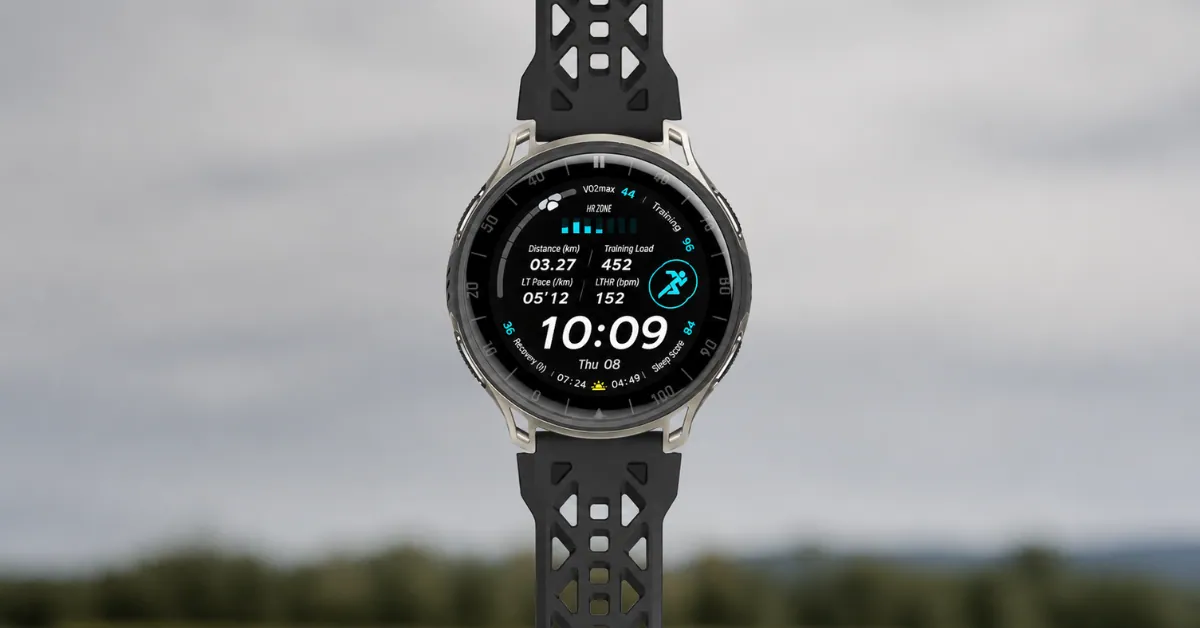
A running watch jumping from $299 to $449.99 in one generation is the kind of price move that should make you pause before adding to cart. That’s exactly what happened with the Cheetah 2 Pro, and the specs alone won’t tell you if the extra $150 is money well spent — because the answer depends entirely on what kind of runner you are.
Here’s a better way to figure that out than reading a spec sheet: three questions. Answer them honestly and you’ll know within two minutes whether this watch belongs on your wrist.
Question 1: Do You Actually Run Far Enough to Need This Battery?
If your longest run is under 90 minutes, skip ahead — battery life isn’t your problem to solve. But if you’re training for anything marathon-distance or longer, the Cheetah 2 Pro’s GPS endurance is genuinely built for you, and it’s worth comparing against our picks for best marathon running watches before you commit.
It’s rated to run continuously through a full marathon and then some, and realistic training use — a handful of GPS sessions a week — still only pulls it down to about one charge weekly.
That’s the kind of margin that matters when you’re three hours into a long run and the last thing you want to think about is battery percentage.
Question 2: Does Your Training Depend on Lactate Threshold Numbers?
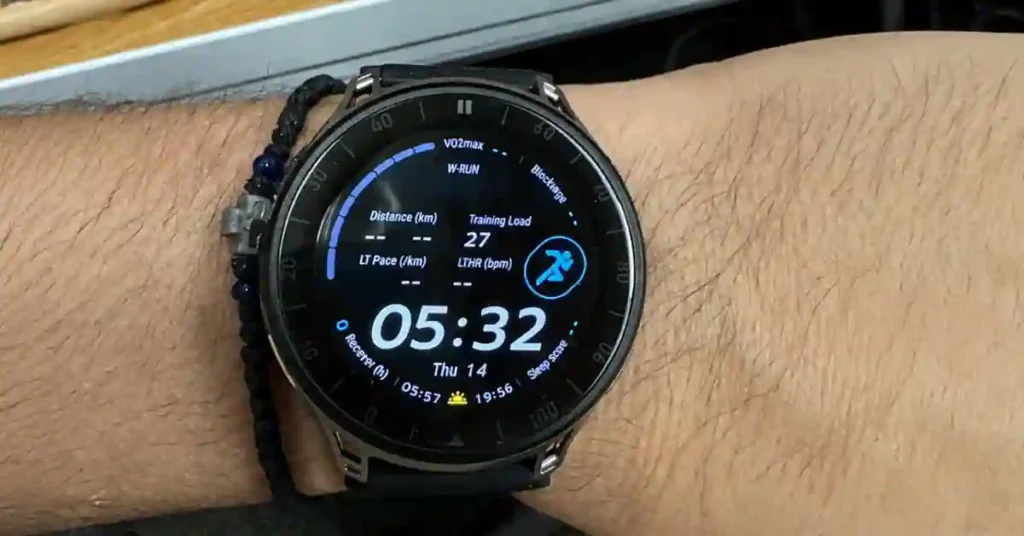
This is the question most reviews skip, and it’s the one that should actually change your decision. The Cheetah 2 Pro’s automatic lactate threshold calculation has come back noticeably conservative — estimating threshold pace slower than a runner’s real, felt effort and slower than comparable Garmin readings. One comparison put it at 9:20 per mile against an actual threshold closer to 8:42.
If you’re a data-driven runner who sets training zones off this number, that gap could quietly steer your entire training block in the wrong direction. If you use heart rate zones or perceived effort instead, this is a non-issue.
Question 3: Are You Already Locked Into Another Ecosystem?
If your Garmin Connect history goes back years, or your entire training log lives in COROS’s app, switching brands costs you more than the price of a new watch — it costs you your data history and muscle memory. The Cheetah 2 Pro’s Zepp app is capable and growing, but it doesn’t have a decade of accumulated third-party integrations behind it yet.
If you’re ecosystem-agnostic or just getting serious about training for the first time, this isn’t a real obstacle.
Quick Verdict
Answered all three honestly? Here’s where that lands you:
Buy it if you run long distances, don’t rely on lactate threshold for training decisions, and aren’t tied to another brand’s ecosystem. You’re getting titanium-and-sapphire hardware that would cost $800+ from Garmin, for close to half that price.
Skip it if lactate threshold accuracy is central to your training plan, or if switching away from Garmin/COROS means losing years of training data you actually use.

Still deciding between this and Amazfit’s cheaper lineup? Our Amazfit Active Max review breaks down whether you even need to spend this much.
What $449.99 Actually Buys You
Strip away the marketing language and here’s the honest inventory:
- A titanium case and sapphire display — the same materials Garmin reserves for its $800+ Fenix line
- Five-satellite, dual-band GPS (GPS, Galileo, GLONASS, BeiDou, QZSS) for better tracking under tree cover or between tall buildings
- Offline maps with 32GB of storage, so you can navigate unfamiliar routes without your phone
- A four-button interface instead of touch-only controls — the better choice when your hands are sweaty or gloved
- Zepp Coach training plans, plus syncing to Strava and TrainingPeaks if you’d rather manage training elsewhere
And here’s what doesn’t quite match the pitch yet:
- Lactate threshold readings run slow — see Question 2 above
- GPS distance has come in slightly short on some interval sessions compared to Garmin references — not a dealbreaker, but not flawless
- The watch is heavier than its predecessor — 45.6g versus 34g, a direct trade-off for the titanium build and bigger battery
- No Strava Routes or Komoot import — you’re still moving GPX files manually
- No charging cable in the box, just the dock
The Full Review: Feature by Feature
The three questions above tell you whether to bother reading further. If you’re still here, here’s the deeper look at how each part of the watch actually holds up.
Design and Build
Pick this watch up and the first thing you notice is that it doesn’t feel like a $299 watch wearing a nicer jacket — the titanium case has real heft and the sapphire crystal has a different kind of shine than the mineral glass on cheaper sport watches.
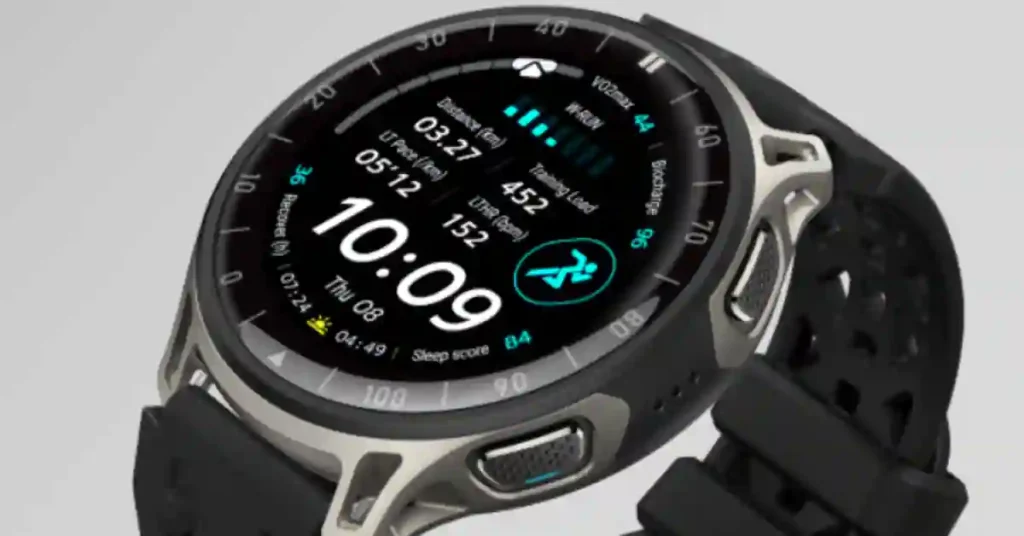
Amazfit kept the four physical buttons instead of chasing an all-touchscreen look, and that’s a genuinely practical call: buttons still work when your fingers are wet, cold, or wrapped in gloves, which a touchscreen can’t promise.
The trade-off is weight. At 45.6g without the strap, it’s noticeably heavier than the 34g original Cheetah Pro. On a run, that difference is small. On a wrist that’s used to something lighter, you’ll feel it in the first few days before it stops registering.
Display
The 1.32-inch AMOLED panel is rated at 3000 nits, which is brighter than most flagship phones. In practice, that translates to a display you can actually read at a glance during a midday run without cupping your hand over your wrist.
Sapphire crystal over the top means it’s also less likely to pick up the fine scratches that dull cheaper displays after a year of daily wear.
GPS and Navigation
This is the category where the price increase is easiest to justify. Dual-band GPS across five satellite systems — GPS, Galileo, GLONASS, BeiDou, and QZSS — is built to solve the classic problem of tracking accuracy dropping between buildings or under heavy tree cover.
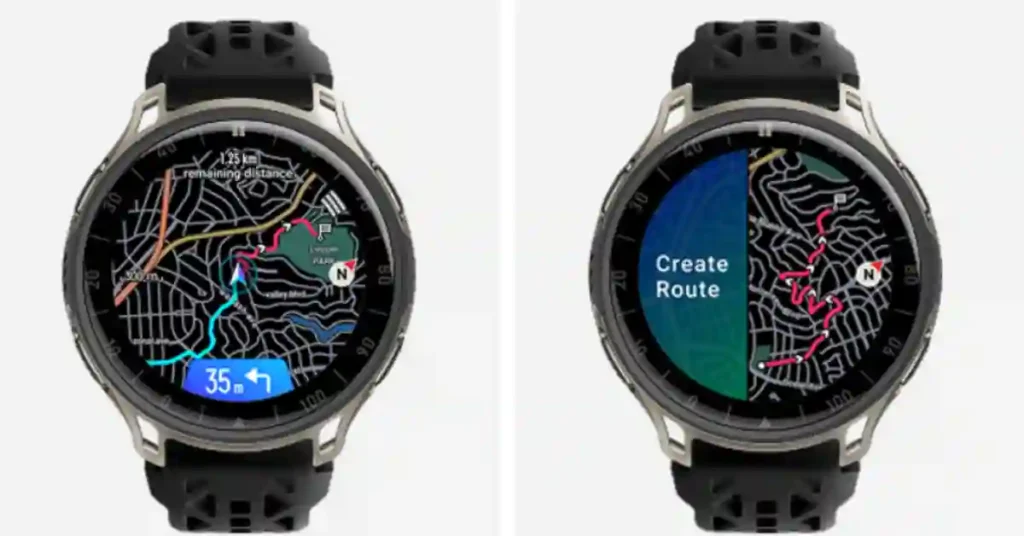
It mostly delivers on that, though distance readings have come in slightly short compared to Garmin references on some interval sessions — a small, occasional gap rather than a consistent pattern.
Offline maps with turn-by-turn navigation and 32GB of onboard storage used to be a feature reserved for Garmin’s higher-end watches.
Having it here changes the calculation for runners who train in unfamiliar areas or travel for races. The one real limitation is route loading — there’s no direct import from Strava Routes or Komoot, so getting a course onto the watch still means manually handling GPX files.
Training Metrics and Coaching
VO2 max, running power, gait analysis, and finish-time prediction are the numbers that separate a training tool from a fitness tracker, and the Cheetah 2 Pro includes all of them.
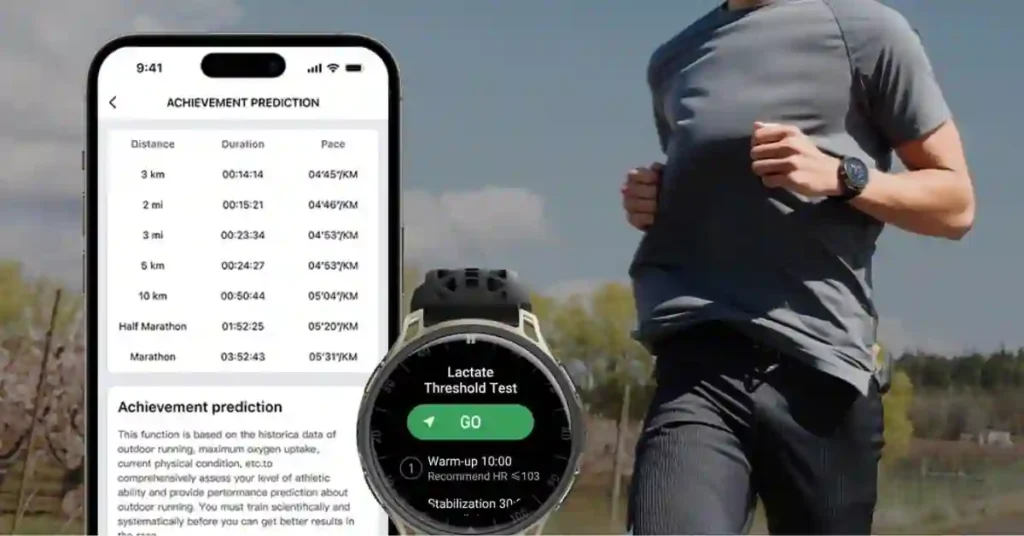
Zepp Coach layers adaptive training plans on top, adjusting as your fitness changes, and if you’d rather use a plan from TrainingPeaks or Runna, both sync in without a fight.
The one metric that needs an asterisk is lactate threshold — covered in detail above — where the automatic calculation has trended slower than actual measured or felt effort. Everything else in this category performs close to what the spec sheet promises.
Health and Recovery Tracking
Continuous heart rate monitoring through BioTracker holds up well for steady-state running, running only a few beats per minute higher than a chest strap reference during normal effort, with a bit of lag when heart rate spikes sharply.
Sleep, blood oxygen, and stress tracking round out the recovery side — useful for spotting when you’re due for an easy week, though not dramatically different from what most competing watches now offer.
Smart Features and Everyday Use
Bluetooth calling and voice control cover the basics without trying to turn this into a full smartwatch. There’s no mention of contactless payments or cellular connectivity, which is a fair omission for a watch this focused on running rather than daily wear.
The charging setup uses a proprietary dock rather than a direct USB-C cable — you’ll need to supply your own cable, and the dock won’t fit third-party chargers, though it is shared across Amazfit’s broader lineup if you own more than one of their devices.
How the Math Actually Works Out
A Garmin Fenix 8 with comparable materials and battery life starts well north of $800 . COROS’s closest comparable running watch, covered in our COROS Pace Pro review, sits under $400 but skips titanium and some of the advanced training metrics entirely.
The Cheetah 2 Pro is positioned in the gap between those two — premium materials at a mid-tier price, with training software that’s still catching up to both.
| Cheetah 2 Pro | Garmin Forerunner 970 | COROS Pace Pro | Amazfit Active Max | |
|---|---|---|---|---|
| Price | $449.99 | $600+ | Under $400 | Much cheaper |
| Case material | Titanium, sapphire | Titanium, sapphire | Aluminum or titanium | Aluminum |
| GPS accuracy | Good, occasional drift | Best in class | Solid | Not built for serious training |
| Lactate threshold accuracy | Runs slow currently | More refined, years of tuning | Not offered on most models | Not offered |
| App ecosystem | Zepp App, still growing | Connect IQ, most mature | Runner-focused | Zepp App |
If hardware were the only factor, the Cheetah 2 Pro would be an easy recommendation across the board. What holds it back from being a universal pick is the software layer — the kind of refinement that only comes from years of real-world data, which Garmin has and Amazfit is still building.
Common Questions
Is the Cheetah 2 Pro accurate enough to train for a marathon?
For pace, distance, and everyday heart rate tracking, yes. For lactate threshold specifically, treat the number as a starting point rather than a rule until it’s been refined further.
Why does it weigh more than the original Cheetah Pro?
The titanium case, sapphire glass, and larger battery all add weight — it’s the direct cost of the upgrades that make this watch more durable and longer-lasting.
Should I wait for a software update before buying?
The weight and manual route loading won’t change with an update, but threshold accuracy could improve as Amazfit refines its algorithm. If that number matters a lot to your training, it may be worth checking back before committing.
How does it compare to the Amazfit Active Max?
The Active Max covers the same basic tracking at a much lower price. The extra cost of the Cheetah 2 Pro buys you the titanium build, longer battery life, and deeper training tools — see our Active Max review for the full comparison.
Bottom Line
The Cheetah 2 Pro isn’t a watch for every runner, and that’s actually the point — Amazfit built something specific enough that a simple three-question test can tell you whether it fits.
If you run long, don’t lean on lactate threshold data, and aren’t locked into another brand, you’re getting hardware that punches well above its price. If any of those three answers went the other way, your money is probably better spent elsewhere.
→ Check Current Price on Amazon
source
