


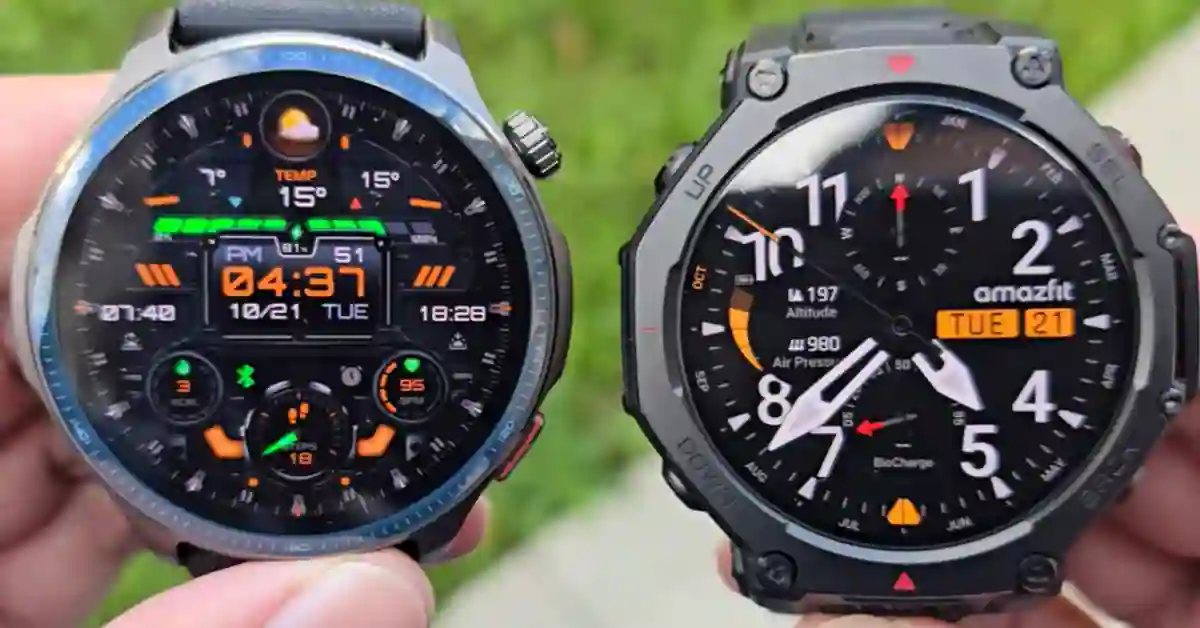
One is a rugged GPS beast built for people who disappear into mountains for weeks. The other is a slim, polished health watch you’d actually want to wear at a dinner table. If you’re sitting between the T-Rex 3 Pro and the Balance 2 right now, the honest answer is — these watches are not really competing for the same person.
I want to be upfront about something before we get into specs: this comparison only makes sense if you know what kind of user you are. The T-Rex 3 Pro is 67 grams, 50.5mm wide, and built like something you’d take on a 10-day alpine traverse.
The Balance 2 is 31 grams, 46.5mm, and designed to look good at work, at the gym, and at a restaurant. Picking the wrong one because it “has better specs” is the most common mistake people make buying watches in this price range.
With that said — let’s go through everything properly.
Full Specs Comparison
| Specification | T-Rex 3 Pro | Balance 2 |
|---|---|---|
| Price (approx.) | ~$279.99 | ~$199.99 |
| Case Size | 50.5 mm | 46.5 mm |
| Weight (no strap) | 67 g | 31 g |
| Display | 1.5″ AMOLED, 3,000 nits | 1.5″ AMOLED, 2,000 nits |
| Battery Life (standard mode) | Up to 26 days | Up to 16 days |
| Battery Life (GPS mode) | Up to 90 hours | Up to 40 hours |
| GPS Systems | 5 systems, dual-freq L1+L5 | 5 systems, dual-freq L1+L5 |
| Offline Topographic Maps | Yes (full OSM topo tiles) | Base maps only |
| GPX Route Import | Yes | Yes |
| Storage | 4 GB | 4 GB |
| Build / Ruggedness | MIL-STD-810H, polymer + metal | Aluminium alloy, glass |
| Water Resistance | 10 ATM | 5 ATM |
| Physical Buttons | 4 buttons | 2 buttons |
| Health Sensors | BioTracker 5.0 PPG | BioTracker 5.0 PPG + skin temp |
| AI Fitness Coaching | Basic | Advanced (Zepp Coach) |
| Sleep Tracking | Standard | Advanced (nap detection, stages) |
| Women’s Health Tracking | No | Yes |
| Offline Music Storage | Yes | Yes |
| Sports Modes | 170+ | 150+ |
| Dual-Band Wi-Fi | Yes | Yes |
| Operating System | Zepp OS 3 | Zepp OS 3 |


Design & Daily Comfort: The Difference You’ll Feel Every Single Day
This is the section most comparison articles skip or skim, and it’s probably the most important one for your actual satisfaction with the watch three months after buying it.
The T-Rex 3 Pro is big. Not just “sporty watch” big — it has a 50.5mm polymer and metal case with raised button guards on the sides and a rubber strap that’s built for grip, not softness.
On a 170mm+ wrist it looks proportional and genuinely impressive. On a smaller wrist it looks like you borrowed someone else’s watch. The 67g weight is noticeable — not painful, but you are always aware it’s there, especially during sleep.
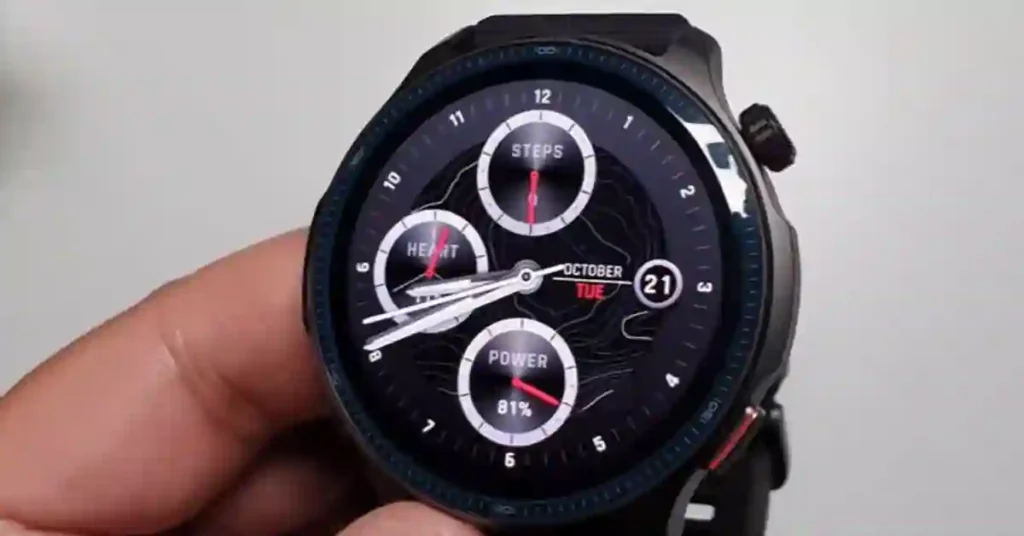
The Balance 2 is the opposite in almost every way. At 31 grams with a 46.5mm case and a silicone or leather strap, it genuinely disappears on your wrist after an hour.
People who wear dress watches will find the proportions familiar and comfortable. The aluminium case has a premium finish that holds up well to daily knocks, but it is not designed to be thrown down a scree slope.
T-Rex 3 Pro wins for outdoor practicality — 4 physical buttons work with gloves, MIL-STD-810H certification means it genuinely handles drops, dust, and temperature extremes.
Balance 2 wins for everyday comfort and style — you’ll actually want to wear it all day, to the office, to sleep, to dinner. The T-Rex 3 Pro is not a watch you forget is on your wrist.
GPS Accuracy & Offline Maps: Where the Gap Is Real
Both watches run the same GPS chipset on paper — five satellite systems with dual-frequency L1+L5 support. In open environments, accuracy is effectively identical between the two. Where they diverge is in deep environments: dense tree canopy, urban canyons, and mountain valleys.
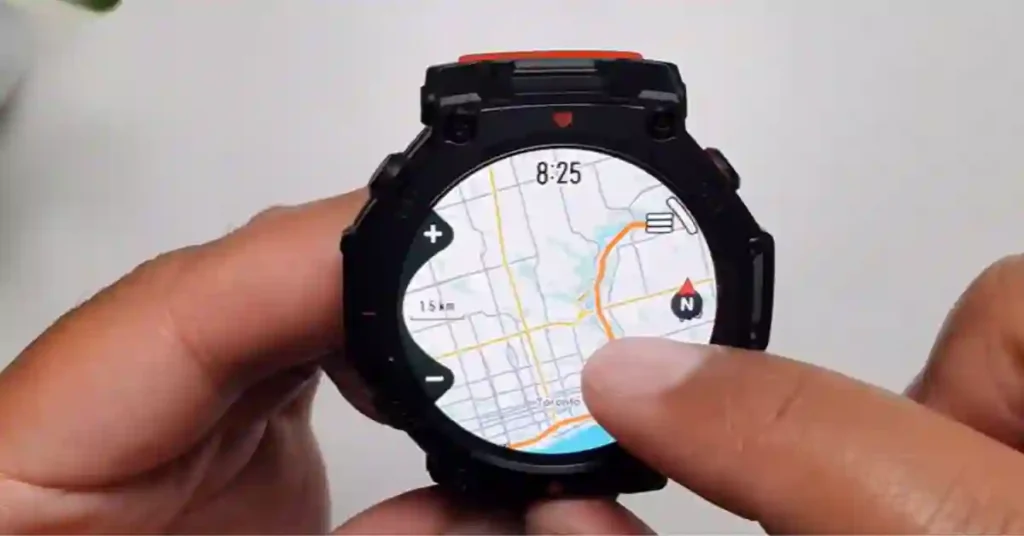
The T-Rex 3 Pro’s L1+L5 lock tends to hold cleaner and recover faster in these conditions, likely because the antenna placement on the larger case gives it slightly better signal geometry.
But the bigger difference isn’t accuracy — it’s what you can do with that GPS signal once you’re locked.
Offline Maps: A Meaningful Difference
The T-Rex 3 Pro supports full OpenStreetMap topographic tiles — contour lines, elevation shading, terrain rendering. You download the region you need over Wi-Fi via the Zepp app before you leave, and the watch renders it natively without any phone or cell signal needed.
The Balance 2 supports base maps only — roads, streets, district labels, points of interest. That’s perfectly adequate for city navigation and light trail running where you’re on a marked path.
But if you’re heading into unmarked backcountry terrain where understanding elevation changes matters, the Balance 2’s map is essentially a road map in a landscape without roads. You’re missing the contour lines that tell you whether that route bends around a 600-meter ridge or climbs straight over it.
Both watches support GPX route import from apps like Komoot and Strava. Load a .gpx file via the Zepp app, sync it, and the route overlays as a breadcrumb line on your map during the activity. This works well on both devices for pre-planned trails.
Battery Life: Real Numbers vs. Advertised Numbers
Amazfit advertises 26 days for the T-Rex 3 Pro and 16 days for the Balance 2 in standard smartwatch mode. In real-world use with always-on heart rate, notifications, and the occasional workout — expect 18–21 days on the T-Rex 3 Pro and 11–14 days on the Balance 2.
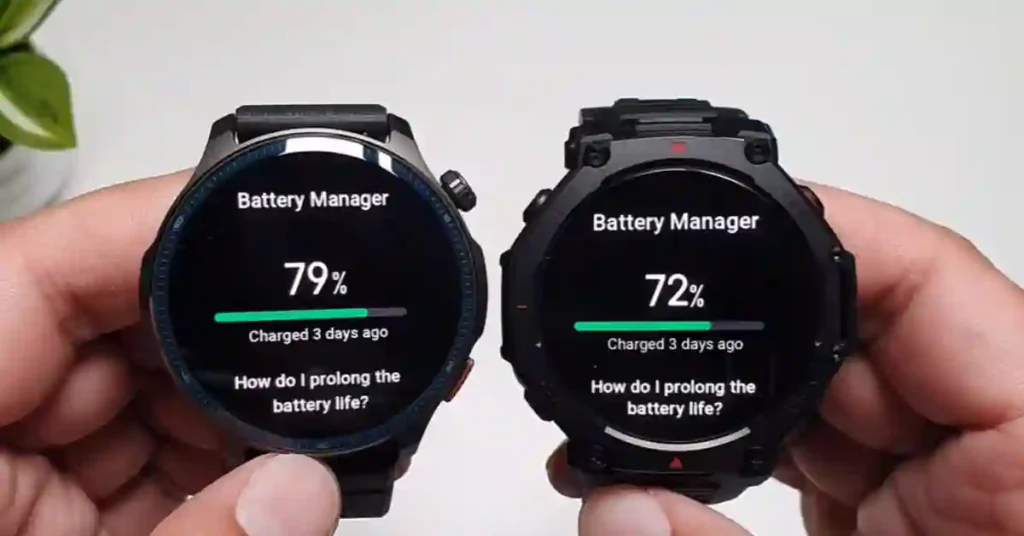
That’s still a significant gap. For people who charge their watch weekly, both are fine. For people heading on a 10-day trek without reliable charging access, the T-Rex 3 Pro’s larger battery is genuinely meaningful — the Balance 2 would need a charge on day 11 or 12 in heavy GPS use, which may not be possible.
GPS continuous battery life is where the gap becomes dramatic: the T-Rex 3 Pro runs up to 90 hours of continuous GPS tracking. The Balance 2 does up to 40 hours. For ultramarathon runners or multi-day hikers who want continuous track logging across a 30–40 hour event, only the T-Rex 3 Pro keeps up.
| Usage Mode | T-Rex 3 Pro | Balance 2 |
|---|---|---|
| Standard (HR + notif) | 18–21 days real-world | 11–14 days real-world |
| Heavy use (daily workouts) | 10–14 days | 7–10 days |
| Continuous GPS outdoor | Up to 90 hours | Up to 40 hours |
| GPS Power Save mode | Up to 120 hours | Up to 60 hours |
For the 7 most effective settings to extend battery life on Amazfit watches — including which GPS mode to choose based on your activity — that guide covers both models in detail.
Fitness & Health Tracking: Two Different Philosophies
The T-Rex 3 Pro treats fitness tracking as a function of outdoor performance — it does the fundamentals well (heart rate, SpO2, stress, sleep, VO2 max) and puts most of its software depth into activity modes and navigation.
It has 170+ sports profiles, strong trail running and hiking metrics, and real-time altitude tracking using barometric pressure that matters in mountain environments.
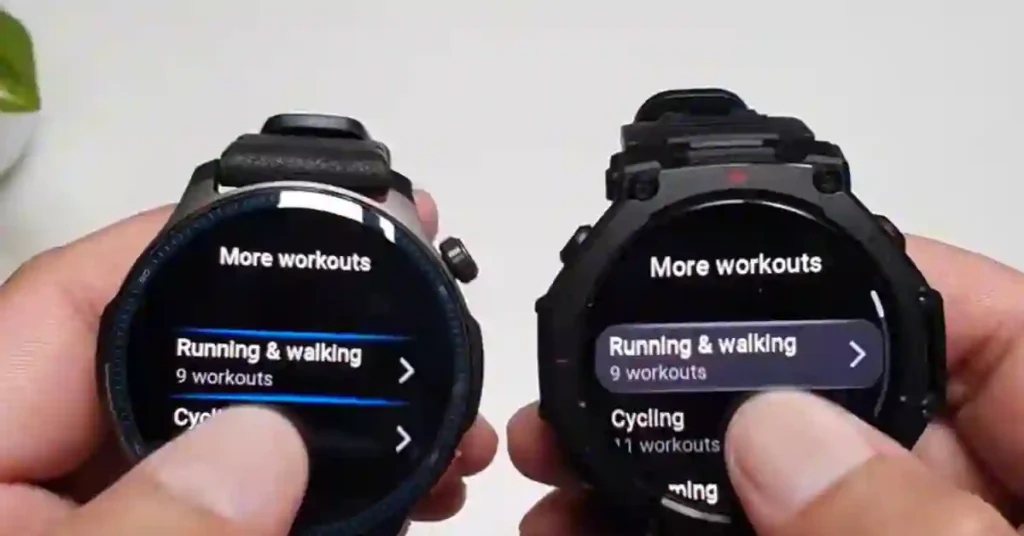
The Balance 2 takes a different angle. It is more interested in your long-term health patterns than your peak outdoor performance. The Zepp Coach AI builds adaptive training plans based on your fitness history.
Sleep tracking is significantly more detailed — it catches naps, splits sleep stages with more granularity, and feeds that data back into your recovery recommendations.
Skin temperature monitoring adds another layer to illness detection and menstrual cycle tracking that the T-Rex 3 Pro simply doesn’t have.
VO2 Max Accuracy
Both watches estimate VO2 max from running workouts. In testing against lab values, both Amazfit models tend to read 2–4 points optimistically — the same pattern you see across most optical HR-based VO2 max estimates.
Neither is a medical-grade measurement, but both trend correctly over time, meaning the number gets more useful as you build a history. For a full breakdown of how VO2 max works on Amazfit T-Rex 3, that guide includes accuracy context and how to get the most reliable readings.
T-Rex 3 Pro wins for outdoor athletes — trail runners, hikers, cyclists who need altitude data, barometric pressure, and 90-hour GPS sessions. The sport mode depth is broader.
Balance 2 wins for holistic health monitoring — AI coaching, detailed sleep stages, skin temperature, women’s health features, and smarter daily recovery guidance.
Software & App Experience: Both Are Good, Neither Is Perfect
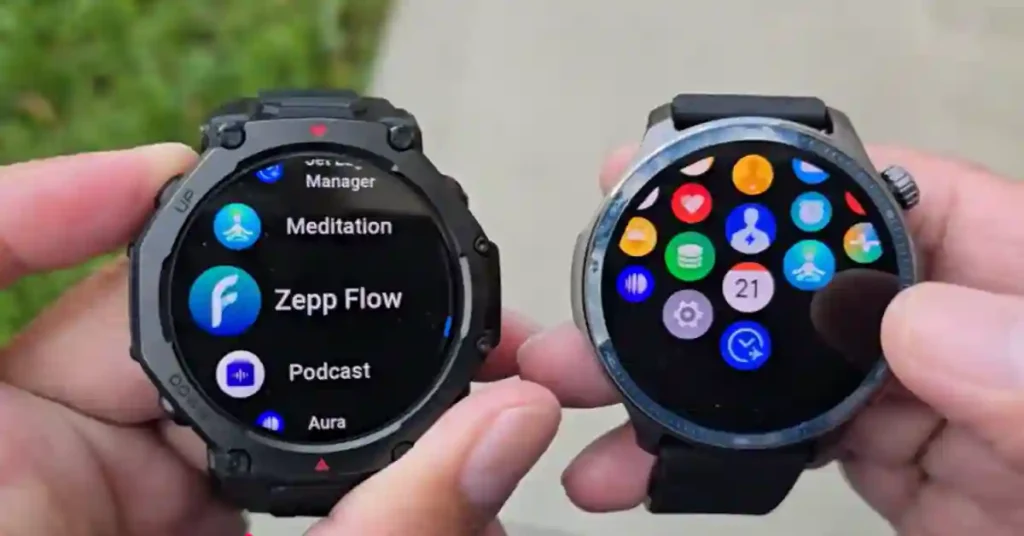
Both watches run Zepp OS 3 and pair with the Zepp app on iOS and Android. The day-to-day experience is largely the same — notification mirroring, workout sync, health dashboards, third-party app support, and a watch face marketplace.
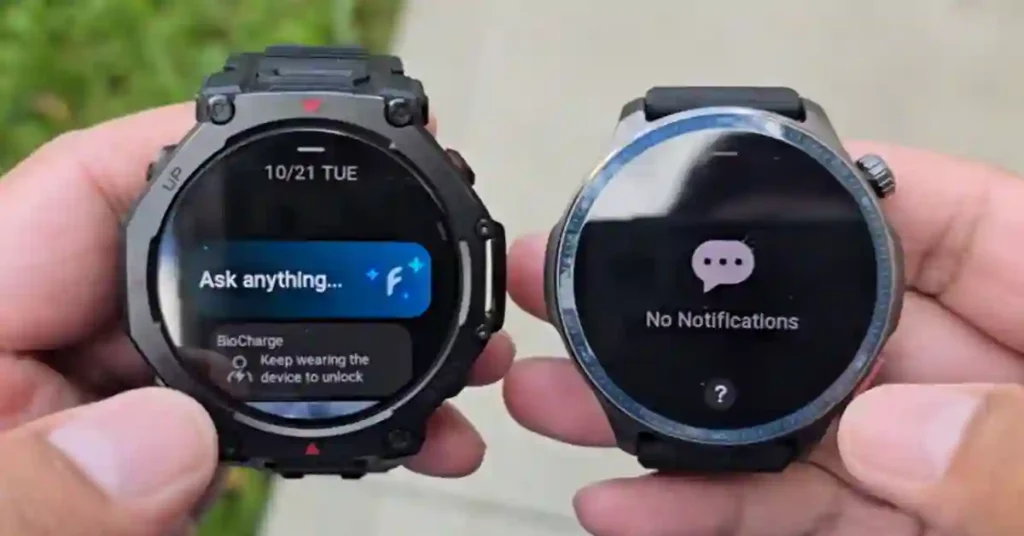
Where they differ is in the depth of their AI coaching layers. The Balance 2 gets more attention in Zepp’s software development roadmap for features like Zepp Coach personalized training plans, deeper sleep reports, and readiness scores.
The T-Rex 3 Pro gets firmware updates focused on outdoor tools — new navigation features, sport mode improvements, and barometric calibration fixes.
Neither watch integrates natively with TrainingPeaks or Garmin Connect. If you’re on a TrainingPeaks training plan with the Balance 2, the sync story has improved but still requires workarounds compared to Garmin’s native integration. Worth knowing before you buy if structured training plans are part of your routine.
App Tip-
For route planning in the Zepp app, both watches support the same workflow. Check our Amazfit route planning guide for how to build and sync routes to either watch before heading out.
Related: If you’re specifically evaluating the T-Rex 3 Pro for trail navigation and GPX route importing, our dedicated Komoot + T-Rex 3 navigation guide covers the full workflow from route creation to live breadcrumb tracking.
Final Verdict: Which One Should You Actually Buy?
If you’ve read this far hoping for a clear universal winner — there isn’t one. These are genuinely good watches designed for different people. Picking the wrong one means spending $200–$280 on a watch you either won’t feel comfortable wearing every day or won’t do what you actually need it to do outdoors.
Here’s the honest breakdown:
Get the T-Rex 3 Pro if…
Your profile
- You do multi-day hikes, trail runs, or backcountry trips regularly
- You need 70+ hours of continuous GPS for ultras or long expeditions
- Offline topographic maps matter — not just street navigation
- You operate in extreme environments (heat, cold, dust, water)
- You prefer physical buttons over touchscreen in gloves or wet conditions
- You don’t care about the watch being fashionable
Get the Balance 2 if…
Your profile
- You wear your watch 24/7 including work and sleep
- Health monitoring depth matters more than outdoor ruggedness
- You want AI coaching and adaptive training recommendations
- Your wrist is under 165mm — the Balance 2 sits proportionately
- You want the watch to look good in non-athletic contexts
- You save $80 and use city and regional trail maps, not topo
One thing worth saying plainly: if you’re a runner who does mostly road or parkland routes and occasional weekend hikes on marked trails, the Balance 2 is probably the better daily companion.
The T-Rex 3 Pro’s advantages are wasted on well-marked paths where you don’t need elevation contours or 90-hour GPS sessions. Save the T-Rex 3 Pro for the people who genuinely need it.
People Also Ask
Is the Amazfit T-Rex 3 Pro better than the Balance 2 ?
Neither is objectively better — they’re built for different users. The T-Rex 3 Pro is better for outdoor athletes who need long GPS sessions, topographic maps, and rugged durability. The Balance 2 is better for everyday health monitoring, style-conscious wear, and people who want lighter AI coaching features. Pick based on your lifestyle, not the spec sheet.
Which Amazfit is Better for Hiking- T-Rex 3 Pro or Balance 2?
T-Rex 3 Pro, clearly. It has offline topographic maps with contour lines, 90-hour continuous GPS, barometric altimeter for accurate elevation, MIL-STD-810H rugged certification, and 10 ATM water resistance. The Balance 2 can track a marked day hike just fine, but for serious mountain navigation or multi-day trips without charging access, the T-Rex 3 Pro is the right tool.
Can the Balance 2 download offline maps?
Yes, but only base maps — roads, streets, and points of interest from OpenStreetMap. It does not support full topographic tile sets with contour lines and elevation data. The T-Rex 3 Pro supports both base maps and topographic maps. For city navigation and light trail use on marked paths, the Balance 2’s base maps are sufficient. For unmarked backcountry or mountain terrain, you want the T-Rex 3 Pro.
Is the $80 price difference between T-Rex 3 Pro and Balance 2 Worth it?
It depends entirely on what you’re buying it for. If you need the T-Rex 3 Pro’s specific advantages — topographic maps, 90-hour GPS, rugged certification, longer battery — then yes, the $80 is absolutely worth it. If those features don’t matter to your actual use case, you’re paying $80 more for a heavier watch with a worse health tracking feature set than the Balance 2. The price gap is justified for the right user; it’s a waste for the wrong one.
Does the T-Rex 3 Pro work with Komoot?
Yes. You can plan a route in Komoot, export it as a .gpx file, import it into the Zepp app, and sync it to the T-Rex 3 Pro as a breadcrumb route overlay on the watch map. The route appears as a coloured line on the offline map during your activity. This is visual navigation — not turn-by-turn voice guidance. Our Komoot T-Rex 3 navigation guide covers the full setup process step by step.
Which one are you going with?
Drop your choice and use case in the comments — especially if you’re coming from a Garmin or another Amazfit model. Real-world context helps other buyers more than any spec table.
You may also like:-
